

Thursday, October 17, 2013
Canon EF-M 22mm f2.0 STM Lens Review

Monday, September 23, 2013
Test of Time Review: Nikon D50
Rewind to 2005 and you'll find that Canon and Nikon were locked in a pretty heated war over the entry level segment of the DSLR market. While Canon tried reaching for the bottom first with their $900 feature-crippled 300D in 2003 to compete with the Nikon D70 and their own 10D, they later backpedalled and launched the higher-spec'd 350D in 2005. At that point, Nikon was left with only their higher-end D70/D70s, and lacked anything that could compete on price. Enter the D50 that same year, a body that could best be considered a 'D70 lite', giving users most of the important features, while reducing the price to a more mass-market level. Nikon would continue this strategy over the next few years, offering the D40 as the D50's replacement.

But when the D40 came out, it omitted an important feature that had been present on all other preceeding Nikon DSLRs - the built in AF drive screw. Without it, any lenses that didn't feature 'AF-S' in their name would be manual-focus only, including Nikon's range of D lenses, and virtually all of their primes. Since then, no entry-level Nikon body has had a screw-drive motor, but at least they started rapidly updating they lenses to the newer G type, so the lack of an in-body drive isn't too much of a problem. Nevertheless, there's a huge selection of good quality D lenses on the used market that can be had for cheap. One can get a D50 and a 50mm f/1.8D for about the same price as the G version of the 50/1.8. Plus, many of Nikon's older macro and telephoto lenses can be had for significantly cheaper than their updated counterparts. Current users of the D3XXX and D5XXX series will likely find it cheaper to a D50 as a second body than upgrading to a D7XXX if they want to dabble in D lenses.
These days, that budget-conscious market for the D50 hasn't changed since they can often be found for around $100 used. But with low resolution and dated tech, does it still perform well in 2013? Read on.

But when the D40 came out, it omitted an important feature that had been present on all other preceeding Nikon DSLRs - the built in AF drive screw. Without it, any lenses that didn't feature 'AF-S' in their name would be manual-focus only, including Nikon's range of D lenses, and virtually all of their primes. Since then, no entry-level Nikon body has had a screw-drive motor, but at least they started rapidly updating they lenses to the newer G type, so the lack of an in-body drive isn't too much of a problem. Nevertheless, there's a huge selection of good quality D lenses on the used market that can be had for cheap. One can get a D50 and a 50mm f/1.8D for about the same price as the G version of the 50/1.8. Plus, many of Nikon's older macro and telephoto lenses can be had for significantly cheaper than their updated counterparts. Current users of the D3XXX and D5XXX series will likely find it cheaper to a D50 as a second body than upgrading to a D7XXX if they want to dabble in D lenses.
These days, that budget-conscious market for the D50 hasn't changed since they can often be found for around $100 used. But with low resolution and dated tech, does it still perform well in 2013? Read on.
Sunday, September 1, 2013
Nikon Lens & Body Brochure 2006
It's a long weekend, but I don't feel like writing too much so it's time for another retroscan entry. This time it's the back few pages of a 2006 Nikon system booklet. A lot's changed since then, that's for sure.
Sunday, August 18, 2013
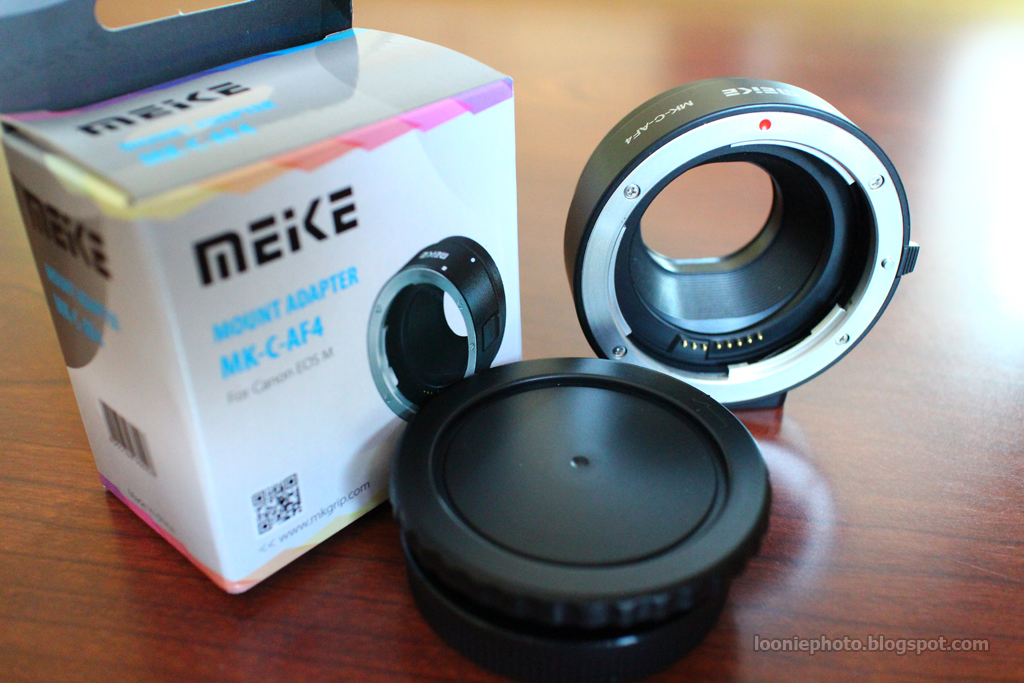
Quick Review: Meike EF-EOS M Adaptor
When the EOS M (review) was first revealed 13 months ago, Canon announced an adaptor that would let owners use their EF lens collection on the mirrorless body. While I personally find this ability to be more of a novelty than anything else (after all, you lose the size/weight advantage with EF lenses on the M), the lack of EF-M lenses leave plenty of gaps that need temporary filling for some users. Not the least of which is a telephoto lens for the system.

Friday, August 2, 2013
Top Five Fridays: Silliest Photography Forum Arguments
Top 5 Friday is being brought back from the dead, or at least this edition (which I started back in February). This one's a little more editorialized that usual, so have those grains of salt prepped and ready.
Anywho...online forums can be a great place to learn, but in reading them, certain hot topics will just bring out the worst in people. Some of those topics tend to be recurring, and some are so dubious and repetitive in nature that they play out the same way just about every time, leading to endless bickering between users. Forum arguments and flamewars are of course best enjoyed from the sidelines, though reading them can occasionally brain damage, depending on who's involved in the discussion. Top 5 are below, in order of how trivial they are.
Anywho...online forums can be a great place to learn, but in reading them, certain hot topics will just bring out the worst in people. Some of those topics tend to be recurring, and some are so dubious and repetitive in nature that they play out the same way just about every time, leading to endless bickering between users. Forum arguments and flamewars are of course best enjoyed from the sidelines, though reading them can occasionally brain damage, depending on who's involved in the discussion. Top 5 are below, in order of how trivial they are.
Sunday, July 28, 2013
New Family Member

Earlier this week, there was a new addition to my small collection in the form of an EOS M and 22mm f/2, which I rather begrudgingly got after several stores in Canada lowered the price to a pretty insane level. After 7 years of having nothing but a DSLR, it's nice to finally have something compact and light that's also capable of decent image quality.
Sunday, July 21, 2013
Macro For The Financially Challenged
Macro photography is one of those things that a whole bunch of photographers plan to do, but rarely actually get around to doing. That's probably because of the prohibitive costs involved in getting somewhat specialized gear - a proper autofocus macro lens of 60mm or more is going to set you back nearly $500, with longer focal lengths costing even more.
There are numerous ways to get decent macro performance without a dedicated lens, including bellows, extension tubes, and close-up lenses. Each comes with their own set of pros and cons, but proper equipment for each will still run you $150+ in general. On the other hand, using a vintage 50mm lens and a couple of cheap adapters, you can accomplish similar results for a fraction of the cost, and with (almost) any DSLR.
There are numerous ways to get decent macro performance without a dedicated lens, including bellows, extension tubes, and close-up lenses. Each comes with their own set of pros and cons, but proper equipment for each will still run you $150+ in general. On the other hand, using a vintage 50mm lens and a couple of cheap adapters, you can accomplish similar results for a fraction of the cost, and with (almost) any DSLR.
Subscribe to:
Posts (Atom)